Wednesday, November 30, 2016

Living within the Clumps

Life is clumpy.

Get over it.

Not helpful.

Really. I mean, how are we supposed to live with unpredictability?

Well. Pretty much the way you've been living so far.

This shouldn't be a big surprise to you. That life is unpredictable, I mean.

Because, you know. Look around. See?


We really really want life to be predictable, so we say things like when a door closes a window opens and there's a reason for everything, but in fact,

that's just not true.

Here's what is true.

First. When a door closes, you can't go that way anymore.

So you've got to find another way.

Chances are good you'll find one. There are lots of options. Sometimes you need to be creative and work hard and be patient. It would have been good for you to get ready for a clump of bad things to come along, so, you know, having some extra money in the bank is a fine idea. For example.

If you know that bad clumps are always out there lurking, then heck. Get ready for them.

And everything doesn't happen for a reason, but lots and lots of things that happen come with a life lesson wrapped up inside, something to learn, something to remember for next time.


Like, wear a seatbelt. Flush twice. All smells are particulate. OK, that last one is not useful to remember at all. It's just disgusting.

However. There are some things that happen that are so terrible, horrific, and monstrous, that not only did they not happen for a reason, but they didn't happen so as to provide you with a neat little lesson to learn from.

They happened because the quality of bad things is clumpy, too. Many bad things are just kinda bad, maybe most bad things. But some are much, much worse. Some are beyond imagining. Some are the stuff of nightmares that are not supposed to transition into daytime and reality. But they do.

Some you just have to survive as best you can. And maybe find people who have already survived as best they could. And then maybe become one of those people, so that you can be one of them when it happens to someone else.

Could be that there is a reason, after all.


We are supposed to help each other. And sometimes it helps to have been there for people who are now there.

Community is the thing. Coming together. Sharing lives and pains and joys and struggles and clumps.

Oh. And sometimes bad things happen because you did something stupid.

Let's not rule that out.

Because that's when everything does happen for a reason, and the reason is, you were an idiot.

Now. If God exists (always an option), then how does he fit into all of this?

Well. His main job is not to keep you safe from bad things. If it is, then he's doing a really crappy job of it.

And we're going to assume that God never does a crappy job on anything.


His main job is not to provide you with object lessons to learn from. With an exception for the stupid things you do. Those, you're supposed to learn from, whether God exists or not. Here's the lesson: That thing you just did? That's what idiots do. Don't be an idiot.

See how easy it is?

Now, as far as all the other bad things, especially the really bad things that happen, that's an interesting question.

Clearly if God exists, he could stop bad things from happening.

And clearly, he doesn't always do that. He might do it sometimes, but, well, you never really know. 'Cause they didn't happen.

So why doesn't he just stop all the bad things and keep only the good things?

Huh. Good question.

Let's give it a shot.

First. If there were no bad things, then we would never have any reason to look to God for help. Or to each other, for that matter.


We might even just start to think about only ourselves all the time, and never about anybody else.

Eventually, that would cause bad things. Maybe it does already. I'm gonna bet on that one.

Second. if there were no bad things, then there would be different levels of good things. And we'd start to rank them so that some of them would start to seem bad to us, and then we'd complain about it.

So even if there were no bad things, we'd come up with some. Maybe we already do that. I'm gonna bet on that one, too.

Third. There are only good and bad things if there is some sort of God around to call them good and bad. Even Richard Dawkins says that. "No design, no purpose, no good and no evil, nothing but pointless indifference."

That's a universe without God.

So even if we're not totally crazy about all the bad things,

they are only bad if God exists.

So you just have to live with that. And you kinda have to live with whatever he calls good and/or bad. You don't get to get to define good and bad for yourself.


Because often something that is good for you, is bad for someone else. One of you is being a jerk.

And we can't really let nations or cultures define what is good and bad, because they are full of people, and people are often not the best judges of that.

Because, well, the Holocaust. For example. There might be others. Ha. Not funny.

Fourth. If there were no bad things, then we'd never do anything at all.

Because some of the bad things are like, um, being hungry. Thirsty. Tired. Dirty. Naked. Walking instead of driving. Or floating. Or flying. Being sick. Or lonely. Or bored.

All of those needs give us something to do. For ourselves. For each other. If we had no needs, we wouldn't do anything. We wouldn't need to. And we wouldn't need each other. Or God.

And we wouldn't have dark chocolate. Or ice cream. Cookies. Hamburgers. Pizza. Fondue. Ceviche. Curry. Sushi. Burritos.

Or cars or movies or jeans or books or bikes or skiis or games or TV or music or scuba diving or dancing or theater or pyramids or great walls or tall buildings or short buildings or buildings or

anything. At all. Like friends. Lovers. Children.


Bottom line. Life is clumpy. So we need each other. And we need God.

Get over it.

Wednesday, November 16, 2016

Life is Chaotic. Then you die.

And when we say Chaotic, we don't mean messy (though life is certainly sometimes messy) but unpredictable. That's what Chaos Theory is all about. Unpredictability.

Life is unpredictable. And then, yes, well, it just so happens that at the end, dying cease to be an option and becomes an imperative.

That might be the only predictable thing about life, in fact. Taxes too, I suppose. Unless you're able to figure out how to not pay them. As some have been known to do.

But just because life's unpredictable doesn't mean it's random.

Nor does it mean that there is no meaning or purpose to existence.


Or that there is no good or evil.

Richard Dawkins and his buds have mistaken unpredictability for randomness.

So the way that life works lies somewhere between randomness and predictability.

So when we say things like God has a wonderful plan for your life or when a door closes a window opens or everything happens for a reason or ask questions like why do bad things happen to good people or most importantly why do bad things happen to ME?, 

we are acting like life is predictable. That there's a reason for everything.

That somebody is in charge and making all the decisions and pulling all the strings and making everything happen according to some grand plan.

God. Or if you don't like God, the Flying Spaghetti Monster or Pay No Attention to that Man Behind the Curtain or Fate or Destiny or Karma or Aliens or the Buddha or the Military-Industrial Complex or the Illuminati.

We're gonna go with God. Short, sweet, simple.

Now the Richard Dawkinses of the world don't wanna go with God or anything resembling God, so they swing all the way to the other end of the bell curve to randomness.

Frankly, that just shows a lack of imagination.

Let's just use some. Imagination, I mean.


So. Let's just say that life will have good things and bad things in it. Also lots of things that are neither good nor bad but are just ... things.

Now. Everybody is going to get some good things and some bad things.

That seems fair.

So when something bad happens to us, here's what we say - why me?

Yeah, we never say that when good things happen.

We kinda assume that good things are normal and bad things are not normal.

For those who believe in God, sometimes we think that God's main job is to protect us from bad things and make sure we only get good things.

That's just silly.

For those who don't believe in God or the Flying Spaghetti Monster or Pay No Attention to that Man Behind the Curtain or Fate or Destiny or Karma or Aliens or the Buddha or the Military-Industrial Complex or the Illuminati, bad things are just baaaad things dammit, and good things are great, unless you are Richard Dawkins pretending for a brief moment that there are no bad or good things, there are just things, in which case, a bad thing is just a thing.

Yeah, he never does that. If he ever did, he'd stop saying that religion was bad. For example. He's a total hypocrite. Sorry, Dicky. And he never ever ever ever says that a bad thing that happens to him is not a bad thing it's just a thing. Never ever ever. Nobody does, not even Dr. Dicky Dawkins.

So really, life is going to have good things and bad things in it.

Now. Here's a math question for you. Or two. Several.


Are the good and bad things going to be equally divided in your life? Just exactly the same number of good things as bad things?

And are they going to be equally divided between humans? That is, will every human get exactly the same number of good and bad things as every other human?

And will the good things and bad things happen at regular intervals so that we will know they are coming and 1) bake a cake (in case it's a good thing or 2) run and hide (in case, well, you know)?

And since Death is like the ultimate Bad Thing, is everybody going to die at the same age?

Whether you believe in God or not, the answer to all those questions is the same:

No. That's ridiculous.

So here's what that means. It means that you will have an unequal number of good and bad things happen to you in your life.

Some of you will get way more good things, and others will get way more bad things. Some won't suffer much. Others will suffer a crapload.

Sometimes in life you'll get a crapload of bad things all at once, and then there might be a loooong pause where nothing bad really happens. Sometimes a ton of good stuff will happen all at once.

And since we're all going to die at different times in different ways, some of us will die before we are born, some when we are born, some when we are babies or toddlers or pre-schoolers or schoolers or teenagers or collegians or young adults or middle adults or old adults, and some will die quickly and painlessly and others will not be that lucky.

And some things will happen for a reason, and others will not.


And sometimes doors just close and windows don't open. Sometimes they'll both open.

It's not random. It's unpredictable.

Your life is not paint-by-numbers. It's not fill-in-the-blank. It's not a crossword puzzle.

It's a blank canvas with dangers and joys lurking in the paint, the brush, in your fingers and brain, in the fabric of time and space and in the interactions that are your emerging life.

And every interaction is the artist of your life.

So here's what Chaos tells us - life is clumpy. Life comes in clumps. Clumps of good things. Clumps of bad things. 

And when you get a clump of bad things that happen to you, you wonder, why do bad things happen to good people, but of course, what you really mean is, why do bad things happen to ME?! ALL THE DAMN TIME!?!?

And the answer is (envelope, please), why not?

Bad things happen to everyone eventually. Sometimes terrible things.

But not equally. Some people have lots of terrible things happen to them. 

And others ... don't.

Because the universe is clumpy.

In scientific terms, the universe started out not clumpy at all, and then got clumpier as time went on. So after 13.8 billion years, there's a crapload of clumpiness out there.

So just about the only other predictable thing about the universe is that it will be unpredictably clumpy.

Live accordingly.

OK, that is not helpful advice.

Wednesday, November 9, 2016

Why bad things happen to good people, or Chaos Theory Explained

Here are some things folks worry about.

Like, why bad things happen to good people.

And, why good things happen to bad people.

Also, does everything really happen for a reason?

Plus, if a door closes, does a window open?

And most importantly, why do bad things happen to ME? Or in your case, YOU?

Now the reasons that we wonder about these things are curious.


It's because there's a certain ... tension ... in our thinking.

Science tells us that there's no reason or purpose for anything.

Not for the universe. Not for the earth. Not for humans.

Not for you. Not for me.

Everything is meaningless. That's what they tell us.

What? You don't believe me?

Well. Since science is all about evidence, here's some. Evidence, I mean.

Richard Dawkins, Oxford zoologist …
…the universe "has precisely the properties we should expect if there is, at bottom, no design, no purpose, no evil and no good, nothing but pointless indifference"…human beings are "machines for propagating DNA”.


Jacques Monod, Nobel Prize winner, physiology/medicine
"The ancient covenant is in pieces. Man knows at last that he is alone in the universe’s unfeeling immensity, out of which he emerged only by chance."


Carl Sagan – Pale Blue Dot
You are there. Along with all the rest of us.

"Look again at that dot. That's here. That's home. That's us. On it everyone you love, everyone you know, everyone you ever heard of, every human being who ever was, lived out their lives. Our posturings, our imagined self-importance, the delusion that we have some privileged position in the Universe, are challenged by this point of pale light. Our planet is a lonely speck in the great enveloping cosmic dark. In our obscurity, in all this vastness, there is no hint that help will come from elsewhere to save us from ourselves."


Steven Weinberg, Nobel Prize winner, physics

"Though aware that there is nothing in the universe that suggests any purpose for humanity, one way that we can find a purpose is to study the universe by the methods of science, without consoling ourselves with fairy tales about its future, or about our own."

Bertrand Russell
"That man is the product of causes …;
that his origin, his growth, his hopes and fears, his loves and his beliefs, are but the outcome of accidental (collections) of atoms;
that no fire, no heroism, no intensity of thought and feeling, can preserve an individual life beyond the grave;


that all the labors of the ages, all the devotion, all the inspiration, all the noonday brightness of human genius, are destined to extinction in the vast death of the solar system,
and that the whole temple of man’s achievement must inevitably be buried beneath the debris of a universe in ruins;
all these things, if not quite beyond dispute, are yet so nearly certain, that no philosophy which rejects them can hope to stand.
Only within the scaffolding of these truths, only on the firm foundation of unyielding despair, can the soul’s habitation henceforth be safely built."

Stanley Kubrick: "The very meaninglessness of life forces man to create his own meaning."

Joseph Conrad: Life is "that mysterious arrangement of merciless logic for a futile purpose."


Jean Paul Sartre: "It is meaningless that we are born. It is meaningless that we die." 

Sartre: "Every existing thing is born without reason, prolongs itself out of weakness, and dies by chance."

Sartre: "Everything has been figured out, except how to live."

Clarence Darrow: Life is a ship that is "tossed by every wave and by every wind; a ship heading to no port and no harbor with no rudder, no compass, no pilot, simply floating for a time, then lost in the waves."


The catch, of course, is that nobody lives like that.

We, and by "we" I mean "everybody", live like there's a reason for us to be here.

And thus, there's a reason why things happen. Bad things. Good things.

And there's supposed to be some sort of ... balance to the universe. 

Justice.
Like, if you are bad, then bad things are what you get.

And if you are good, then you get good things.

The universe is supposed to be sort of like Santa Claus. There's a list. All of our names are on it. And good and bad things get divided up perfectly and justly and fairly between good and bad people.

Now, if there's no meaning to the universe, all of that is just
ridiculous. Things just happen randomly without meaning or purpose, so when a bad or a good thing happens to you or me, well, tough luck or wasn't that nice?

So bad things will happen to good people and good things will happen to bad people randomly and without rhyme or reason, and good things will happen to good people and bad things will happen to bad people randomly and without rhyme or reason.

And sometimes more good things will happen to bad people and sometimes more bad things will happen to good people, because it's all random.

Nothing happens for a reason. Things just happen to people because things just happen and people are always getting in the way.

When a door closes, a door closes. Windows opening are entirely
unrelated and random. Sometimes windows don't open when doors close.

In fact, if we really paid attention to Richard Dawkins up there, there are no good things or bad things, because there is no good or bad. There are just things.

"Good" and "bad" are just levels of comfort and inconvenience that
we make up out of nothing. Because we persist in thinking that we matter. That we are here for a reason. That there is meaning and purpose to our lives.

Silly us.
Perhaps, though, we might be wrong. In part, at least.

That would be ... intriguing.

Wednesday, October 26, 2016

God Does Not Have a Wonderful Plan for Your Life. Sorry.

A lot of well-meaning but sadly confused religious folk have been walking around thinking this:

God has a wonderful plan for your life.

And our cartoonist from the last blog post has been suckered in by this, as follows:

Our lives are predetermined, so it's not our fault if we do crappy things to each other, and so hell isn't really fair.


That is, God has this wonderful plan, but we, um, aren't interested since sex, drugs and rock&roll are so much more fun (or partying or getting drunk or being a hedgefund manager or a dictator or a serial killer or a rapist or a drug dealer or just your garden variety very nice kind to others giving and generous atheist), so we miss the plan and go to hell. Dang. Doesn't seem right. The last one, I mean.

But our religious folk are confused.

God does not have a wonderful plan for your life.

Your life is not predetermined by God.

Nobody's is.


You get to make decisions. And the decisions add up to being the life you create.

You can make God-ish decisions. Feed the hungry. Care for the homeless. Fight injustice and oppression. Don't be a jerk.

Or you can make not-God-ish decisions. Pretty much the opposite of all of those. Basically, be a jerk.

Religious folks somehow got the idea somewhere along the way that God had everyone's life entirely planned out, start to finish, and you just had to figure out what his plan for you was, and then all would be peachy.

Only he doesn't tell you what the plan is.

Which is kinda nasty.

So you have to guess a lot and hope for the best. And pray. There's lots of praying.

So, the assumption goes, every minute is planned out. And you have to guess right. And he's not telling.


That's not the way it works. Nothing is predetermined. Nothing is planned out. Things might go well. They might go really really badly.

But. Regardless of what choices you make in your life, you're supposed to do the same thing all along the way.

Don't be a jerk. Love God. Love your neighbor. Be nice.

Now. Since God is God (if he exists) and can do anything he wants, he surely might have a plan for someone every now and then. There are examples.

But for most of us, and when I say most, I mean statistically pretty close to all of us, there's one plan.

Live your life. Make good choices. Do the right thing. Don't be a jerk.

That's free will. Take whatever job you want. Marry whomever you want. Live wherever you want. Do whatever you want to do. Live your life. Make good choices. Do the right thing. Don't be a jerk.


Here's what I'm telling you. God doesn't have a job, a spouse, a house, or anything else planned out for you. I'm not saying he doesn't care, but it's not planned and waiting for you.

You get to choose. It's a free will thing.

If you assume that God has planned it all out, and all you have to do is figure it out via prayer and fasting, then there would be, it seems to me, only two types of decisions.

Perfect ones.

Crappy ones.

That's it.

But life doesn't work that way.

Because there are no perfect choices.

Jobs - every job is going to be crappy at some point or another.

Spouses - every spouse is imperfect, and that includes both sides of the spouse coin.


Living here, living there - there are no perfect places to live, and I'm a good source, because I've lived in Zurich, Geneva, Pebble Beach, Monterey, and Colorado, which are pretty danged spectacular places to live.

But not perfect. Spectacularly not perfect, in fact.

Maybe you think God wants you to go to Africa or the inner city or China.

It would surely be fine for you to go there and do whatever it is you think that you are supposed to do.
No offense.

But there stands an excellent chance that it will surely not be perfect when you get there.

You'll be lonely. Bored. Lusty. Frustrated. Scared. You'll hate the locals and the local culture at some point, maybe at all points.

And if you think that you might not have done better to have stayed where you were, well, you easily might have.

Going, staying. Either is fine. Either is a good decision. Both come with good, bad and ugly parts.


It may be that the only real free will decision you get to make is kind of Hamlet-y. To be a jerk or not to be a jerk. Wherever you are and whatever you do.

That's worth thinking about.

BTW, I think it's useful to make the more challenging choice sometimes. Pain and suffering are good for you. Up to a point.

Tuesday, October 11, 2016

Now It Gets Confusing

So. Here's what we are saying.


In a universe with a starting point where things are not always predetermined (because of quantum uncertainty) or predictable (because of Chaos Theory and the Butterfly Effect), then it is possible that both God and Free Will exist.

That's because thinking types back in the 18th Century said that if the universe is predetermined by the laws of physics and totally predictable and infinitely old, then 

1) you don't need God to do anything and 

2) you can't have free will. 

The laws of physics make everything happen, they've always been there, nobody made them, nobody made anything, and they make you do everything you do.

But since the universe is not infinitely old and the laws have not always been there because they came into existence with Big Bang, and quantum uncertainty is the Way Things Work, then 

1) you might need God to make everything happen and 

2) you might have free will.

Nice. God and Free Will got thrown out together, so they get to come back together. Sweet.

However. There are some skeptical types who say things like this:


If God already knows everything that's going to happen, then you can't have free will, since he already knows what you are going to do.

That is...

if God exists, then free will can't.

Or, if God exists, then HE predetermines everything, not the laws of physics.

Hm. That is a problem.

Because now we're in a place where free will only exists if God exists, but if God exists, then free will can't.

That cartoon right there says it just like some folks want it to be said.

So what you gotta do is look at assumptions and conclusions and see if they are good physics. Since if God exists, he made physics that way that it is.

Here we go.

"If God knows the future"

OK, that works. If God exists, he made space and time (which bounced into existence with Big Bang, so that's good physics). If he made space and time, then wherever or whenever he exists, it's not in space and time. He's outside of space and time. 

(Make sure you get this part. God doesn't exist in a where or a when. He does not occupy a point in space and/or time.

(That's the way we [who exist in points in space and time until we don't exist anymore] understand existence.

(So if someone asks the question, does God exist?, the answer is, what do you mean by existence?

(If he exists, he does not exist in the same way that we do. He created the way that we exist.)

Anyway.

Since he's God (if he exists), then, well, he's God, and he can see all of space and time together. Now since to a photon traveling at the speed of light, all of space and time are one point, then clearly God is at least as cool as a photon, so since he can see all of space and time, then he knows the past, the present and the future all at once. He sees it all. But not like a movie that he has already watched. Everything is a point to God, so he sees it all at once.

That's just physics.

"The future must already be determined, and if the future is already determined, we have no control over our future actions."


You wanna take a shot at this one? Go ahead. I'll wait.

(clock ticking. background humming. toe tapping. very large claw tapping.)

Time's up. Let's see how you did.

Problem the first: our cartoonist, and all the thinkers and philosophers who derived their thinking and philosophy from this cartoon (or maybe vice versa), is/are fooled by time. S/he isn't thinking about God outside of time, but God inside of time, as though the place God hangs out is just like the time and place we hang out, and, well,

it isn't.

We don't know what it is, but it's not time and space the way that we experience it.

So trying to catch God in a space-time trap isn't gonna work.

Problem the second: our cartoonist et al is blissfully unaware that this universe, the universe that if God exists and created it, is quantum. And it's chaotic.

And thus, nothing is predetermined. None of our lives, our decisions, our actions, anything we do is predetermined by anything except maybe behavioral conditioning, and we don't know where that starts and stops.

And that's the way God made it, because 1) if he exists 2) he made it and 3) intended for us to find it 4) the way that it is.

Now you might say, as my atheist friend Trevor once said, well, just because we can't know all of the forces that cause things to happen chaotically, doesn't mean that they can't be known by someone (in a God-like sort of way). And thus, things are predictable.

To which I responded, those forces might be capable of being known, but they get smaller and smaller until they become quantum, and then

they cannot be known anymore, because at the quantum level, nothing is predetermined. Ultimately, everything is quantum, and nothing is predetermined.


So here's the answer. God knows what you are going to do. No, that's not right. God knows what you did, what all of us did, because he sees all of time at once. But what you are going to do is not predetermined and is up to you. He sees the beginning and the middle and end game all at once. But you get to ride the ride and make the decisions yourself.

If you like, it's a quantum thing. He both knows and does not know, depending upon how he is looking. It's all in the observation. And you, as the observer yourself, have a choice to do, or not to do.

Time is not seen by God as a movie. It is a photo. Even though you, and I, and everybody else lives it as a movie.

At least, that's what the physics of the universe tells us.

Problem the third: S/he (the cartoonist) has been fooled by an unfortunate misunderstanding of God's interaction with humans, created by well-meaning but sadly confused religious folk.

We'll talk about that next.

Wednesday, September 28, 2016

Free Will - Get Over It. Or not.


So. Do we have free will or not? We (really really)(are totally compelled by the lack of free will to really really) want to know.

We should maybe read all of the very latest highly intelligent totally informed scientifically science stuff about it.


Here you go, then. From the Atlantic Monthly, June 2016:

There’s No Such Thing as Free Will

The sciences have grown steadily bolder in their claim that all human behavior can be explained through the clockwork laws of cause and effect. This shift in perception is the continuation of an intellectual revolution that began about 150 years ago, when Charles Darwin first published On the Origin of Species.

Shortly after Darwin put forth his theory of evolution, his cousin

Sir Francis Galton began to draw out the implications: If we have evolved, then mental faculties like intelligence must be hereditary. But we use those faculties—which some people have to a greater degree than others—to make decisions.

So our ability to choose our fate is not free, but depends on our biological inheritance.

Galton launched a debate that raged throughout the 20th century over nature versus nurture. Are our actions the unfolding effect of our genetics? Or the outcome of what has been imprinted on us by the environment? Impressive evidence accumulated for the importance of each factor. Whether scientists supported one, the other, or a mix of both, they increasingly assumed that our deeds must be determined by something.

In recent decades, research on the inner workings of the brain has helped to resolve the nature-nurture debate—and has dealt a further blow to the idea of free will. Brain scanners have enabled us to peer inside a living person’s skull, revealing intricate networks of neurons and allowing scientists to reach broad agreement that these networks are shaped by both genes and environment.

But there is also agreement in the scientific community that the firing of neurons determines not just some or most but all of our thoughts, hopes, memories, and dreams.


We know that changes to brain chemistry can alter behavior—otherwise neither alcohol nor antipsychotics would have their


desired effects. The same holds true for brain structure: Cases of ordinary adults becoming murderers or pedophiles after developing a brain tumor demonstrate how dependent we are on the physical properties of our gray stuff.

Many scientists say that the American physiologist Benjamin Libet demonstrated in the 1980s that we have no free will. It was already known that electrical activity builds up in a person’s brain before she, for example, moves her hand; Libet showed that this buildup occurs before the person consciously makes a decision to move. The conscious experience of deciding to act, which we usually associate with free will, appears to be an add-on, a post hoc reconstruction of events that occurs after the brain has already set the act in motion.


The 20th-century nature-nurture debate prepared us to think of

ourselves as shaped by influences beyond our control. But it left some room, at least in the popular imagination, for the possibility that we could overcome our circumstances or our genes to become the author of our own destiny. The challenge posed by neuroscience is more radical: It describes the brain as a physical system like any other, and suggests that we no more will it to operate in a particular way than we will our heart to beat. The contemporary scientific image of human behavior is one of neurons firing, causing other neurons to fire, causing our thoughts and deeds, in an unbroken chain that stretches back to our birth and beyond. 

In principle, we are therefore completely predictable.

If we could understand any individual’s brain architecture and chemistry well enough, we could, in theory, predict that individual’s response to any given stimulus with 100 percent accuracy.


So there you go. No free will.

Except. But. There's always a but. From NewScientist, 6 August 2012:

Brain might not stand in the way of free will

Advocates of free will can rest easy, for now. A 30-year-old classic

experiment that is often used to argue against free will might have been misinterpreted ... So what does this say about free will?

“If we are correct, then the Libet experiment does not count as evidence against the possibility of conscious will”...

Now, you might say, looking carefully at the dates, that one is 4 years before the other one. So doesn't that mess it all up?

No, it means that the Atlantic writer wasn't paying attention in 2012.

Science is so complicated.

And lo and behold. Check this out from ScienceDaily.com in July 2016:

Johns Hopkins University researchers are the first to glimpse the human brain making a purely voluntary decision to act.

Unlike most brain studies where scientists watch as people respond

to cues or commands, Johns Hopkins researchers found a way to observe people's brain activity as they made choices entirely on their own.

For the first time, researchers were able to see both what happens in a human brain the moment a free choice is made, and what happens during the lead-up to that decision -- how the brain behaves during the deliberation over whether to act.

The actual switching of attention from one side to the other was closely linked to activity in the parietal lobe, near the back of the brain. The activity leading up to the choice -- that is, the period of deliberation -- occurred in the frontal cortex, in areas involved in reasoning and movement, and in the basal ganglia, regions deep within the brain that are responsible for a variety of motor control functions including the ability to start an action. The frontal-lobe activity began earlier than it would have if participants had been told to shift attention, clearly demonstrating that the brain was preparing a purely voluntary action rather than merely following an order.

Together, the two brain regions make up the core components underlying the will to act, the authors concluded.

"What's truly remarkable about this project," said Leon Gmeindl, a research scientist at Johns Hopkins and lead author of the study, "is that by devising a way to detect brain events that are otherwise invisible -- that is, a kind of high-tech 'mind reading' -- we uncovered important information about what may be the neural underpinnings of volition, or free will."


So once again, free will is back. Last month. Next month? Who can tell?

And finally, from the smartest man alive, physicist Ed Witten:

I think consciousness will remain a mystery. Yes, that's what I tend to believe.

I tend to think that the workings of the conscious brain will be elucidated to a large extent.

Biologists and perhaps physicists will understand much better how the brain works.

But why something that we call consciousness goes with those workings, I think that will remain mysterious.

I have a much easier time imagining how we understand the Big Bang than I have imagining how we can understand consciousness... 


The brain, apparently the seat of free will, may forever remain a mystery. Or at least until everyone's forgotten about my having said so.


Wednesday, September 14, 2016

Free Will and Harley Guys

It would not be wise to piss off Harley guys.

However. If any happen to be reading this, they'll be the ones with a sense of humor.

We're counting on that.

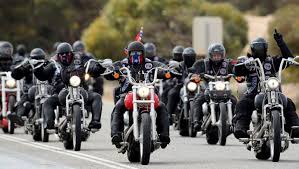
Harley guys ride Harley Davidson bikes. Harleys (as in, the bikes) are all pretty different. You can get them built to your own specs. So that, you know, it's not like all the other Harleys.

And then you get dressed to ride your Harley. Then you ride off to meet with all the other Harley guys.

Might be your own little group from the local Harley hood. 

Might be Sturgis. Which is the annual mating grounds of Harley guys. Don't Google Sturgis. Disturbing pics.

Harley guys are fiercely individualistic. They set themselves apart from regular guys. They are fiercely different. They are not like anyone else. They stand alone. Fiercely.


Except.

They all kinda 

look alike.

So do their bikes.

They fiercely want to look different from all the other guys.

But not that different from, well,

Each other.

Because they want to belong to that group. They want to be a Harley guy. So they gotta ride a Harley and dress like a Harley guy.


Totally naked Harley chick.
Even gotta have a Harley chick on the back. And she's gotta dress (or not) like a Harley chick.

So here's a subculture that fiercely values free will. Individualism. Freedom. Liberty. The Right To Be Your Own Person.

As much or much more maybe than any other subculture in the world.

But that's gotta be balanced with the even more fierce desire to belong, to fit in, to look right, act right, dress right.

So. Are Harley guys fiercely acting out of free will, or are they just one more version of 

Pavlov's Dogs?

I'm gonna say this cuz I think it's pretty much true: the only people who are truly different from everyone else

tend to be certifiably nuts.


Because if normal people show up to their group of buds and they don't look like the rest of the buds, then the social pressure (as in, making serious fun of the idiotic way they look) is huge and they tend to show up next time fitting into the norms.

Even if they are all Harley guys.

Because. We all want to belong. To fit in. To be like the people we want to be like.

There are (I propose) two things in life that motivate us.

One. To belong. To be loved. To be a part of something that is greater than ourselves.

Two. To matter. To make a difference. To leave a mark. To leave the world a different (presumably better) place than it was. We want our lives to have a meaning and purpose.

And we will largely do whatever it takes to get those two things done.

Pavlov. Those are our stimuli. To be loved. To matter. And we will slobber with all the dogs to be loved and to matter.

There may be no free will about it. OK, maybe we choose which groups we want to be a part of, but I'm thinking that we are (mostly?)(completely?) influenced in that decision by the experiences we have.

For example. I have no desire to be a Harley guy or for my wife to be a Harley babe.


Not cool. Totally not cool.
But I love to ski. I'm really good. So I want to look like a really good skier. I want to dress like one. I want to have skiis and boots and even poles that really good skiers might have. I want to have a fine-looking ski jacket, and fine- looking goggles, and a cool helmet, and cool gloves, and even (this is true) cool skier long-underwear.

Now. If I have all of this cool gear and then I ski like a dork, well, that's not cool. Then I'm pretending to belong when I don't.

But I don't ski like a dork. So I get to belong. And my wife is a fine skier. So I have a beautiful ski wife. Awesome. It's the whole package. If I call her a beautiful ski babe or ski chick, I'm going to find one of my ski poles lodged in an uncomfortable place. So I'm not going to do that.

So here's the question. If life pulled a Tom Hanks "Cast Away" trick on me and I ended up alone with a volleyball in a deserted ski resort, would I still ski? Am I making a free will decision to ski, or am I doing it because I want to belong to cool skiers?

Aye. That's a good question.

Because the reasons that I am a skier are 1) my parents took me skiing in Colorado, and then 2) we moved to Switzerland when I was in high school, and 3) skiing was The Thing To Do in Winter in Switzerland, and we had a ski team and I was on it (briefly) and so 4) skiing is totally cool. To me, anyway.


Curling groupies. Clearly nobody would look like this
by making a free will decision to do so.
Curling to me is not cool. It's ridiculous. But to curlers, curling is awesome. There might even be curling groupies. Of course there are curling groupies. Clearly not a free will decision to be a curling groupie.

I'm fully convinced that curling was invented by drunk "people" (meaning drunk "guys") in the Far North who said to themselves one night, what can we do with ice, a big rock, and some brooms? And can we wear ridiculous pants, too? Awesome!

Anyway. So the question is, are ALL of our decisions caused by influences outside of ourselves, or just MOST of them? And if it's MOST, then where does free will actually start?

And the answer is...

Nobody really knows. 

So everybody just makes stuff up.